Your Child's First Eye Exam: What to Expect
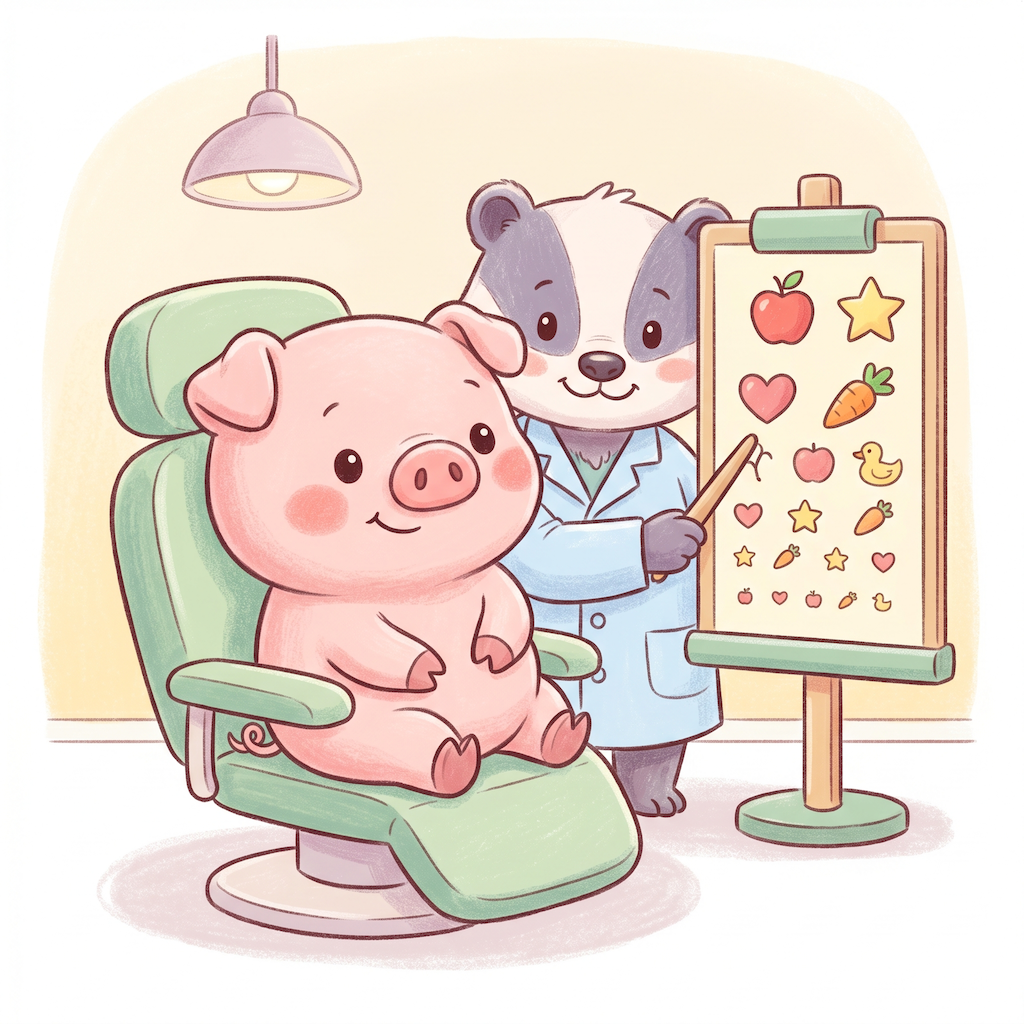
The first eye exam can feel intimidating for parents: How can a doctor possibly test a toddler who can't read letters or even sit still? The good news is that pediatric eye exams are designed entirely around young children. This guide walks you through what happens, why dilating drops are used, and how to make sense of the results.
When Should My Child Have Their First Eye Exam?
Many vision problems, including amblyopia, have no obvious symptoms and can only be caught by an exam. Most pediatric guidelines recommend checks at these milestones:
- Newborn to 6 months: A basic check during routine well-baby visits, looking for red reflex, eye alignment, and the ability to follow objects.
- Around age 3: The first comprehensive vision screening, ideal for catching amblyopia within the golden treatment window.
- Before starting school (age 5 to 6): A full exam to make sure vision is ready for reading and learning.
If you ever notice a turned eye, head tilting, squinting, or a white reflection in photos, book an exam right away rather than waiting for the next milestone.
How Do They Test a Child Who Can't Read?
This is the question parents ask most. Eye care professionals have a whole toolkit that needs no reading and very little cooperation:
- Fixate and follow: The examiner watches whether each eye can lock onto a toy or light and follow it smoothly.
- Preferential looking cards: Babies naturally look toward a patterned image rather than a blank one, which lets the doctor estimate vision without any words.
- Picture and symbol charts (LEA symbols): Instead of letters, toddlers name or match simple shapes like a house, apple, circle, or square.
- Photoscreeners and autorefractors: Handheld devices that take a quick "photo" of the eyes from a short distance to estimate the prescription and detect risk factors, often in seconds.
- Cover test: The examiner briefly covers one eye then the other to check alignment and whether one eye drifts.
What Is a Dilated (Cycloplegic) Exam?
At some point the doctor may put drops in your child's eyes and ask you to wait 20 to 40 minutes. These cycloplegic drops do two important things:
- They widen the pupil so the doctor can see the retina and optic nerve clearly.
- They temporarily relax the eye's focusing muscle. Children can over-focus and mask a prescription, so relaxing the muscle reveals the true refractive error. This is essential for diagnosing amblyopia and prescribing accurate glasses.
Afterward, your child's vision will be blurry up close and their eyes will be sensitive to light for several hours, sometimes into the next day. Bring a sunhat or sunglasses, and don't be alarmed by the large pupils.
Understanding the Numbers: What Does 20/40 Mean?
Visual acuity is usually written as a fraction like 20/20 or 20/40. The top number is the testing distance (20 feet). The bottom number is the distance at which a person with normal vision could read that same line.
20/40 means your child sees at 20 feet what a person with standard vision sees at 40 feet. The bigger the bottom number, the blurrier the vision.
You may also see the prescription written with three values: sphere (near or farsightedness), cylinder (astigmatism), and axis (the angle of astigmatism). A plus sign means farsighted; a minus sign means nearsighted.
The Key Test for Amblyopia: Comparing the Two Eyes
Amblyopia is diagnosed when one eye sees clearly worse than the other, even with the best possible glasses, and no other disease explains it. That is why the doctor always measures each eye separately and compares them. A meaningful gap between the two eyes, or a large difference in prescription (anisometropia), is the warning sign that triggers treatment.
How to Prepare Your Child (and Yourself)
- Schedule the visit when your child is rested and fed, not near nap time.
- Play "eye doctor" at home first: cover one eye, name pictures, shine a small flashlight.
- Keep your own tone calm and positive; children read your anxiety.
- Bring any current glasses, a favorite toy, and a list of questions.
- Tell the doctor about any family history of amblyopia, strabismus, or strong prescriptions.
How Piggy Peekaboo Fits In
An exam diagnoses the problem; treatment is what happens at home over the months that follow. Once your eye doctor prescribes glasses or patching, Piggy Peekaboo helps turn that daily routine into a game your child actually looks forward to, supporting the focus and visual scanning the weaker eye needs.
Note: This article is for general education only. Always follow the diagnosis and plan provided by your ophthalmologist or optometrist.